What Really Happens to Your Junk After Removal in Beaverton
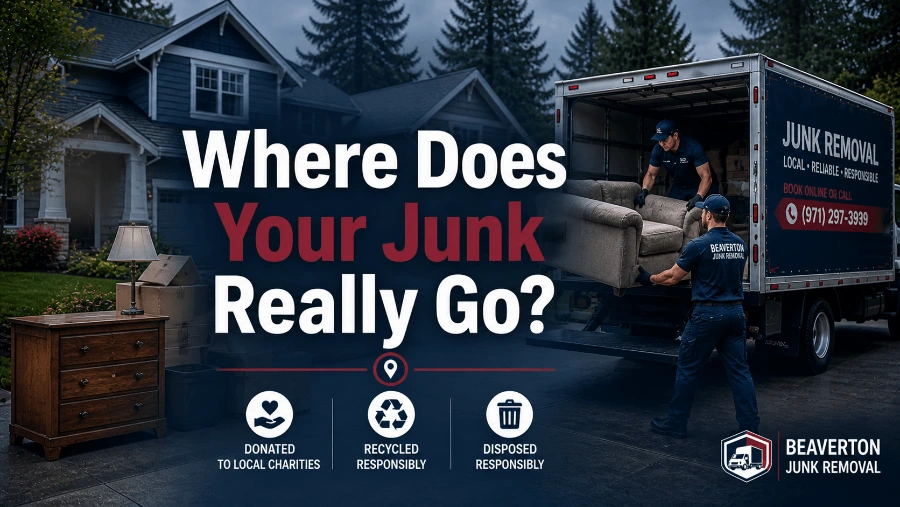
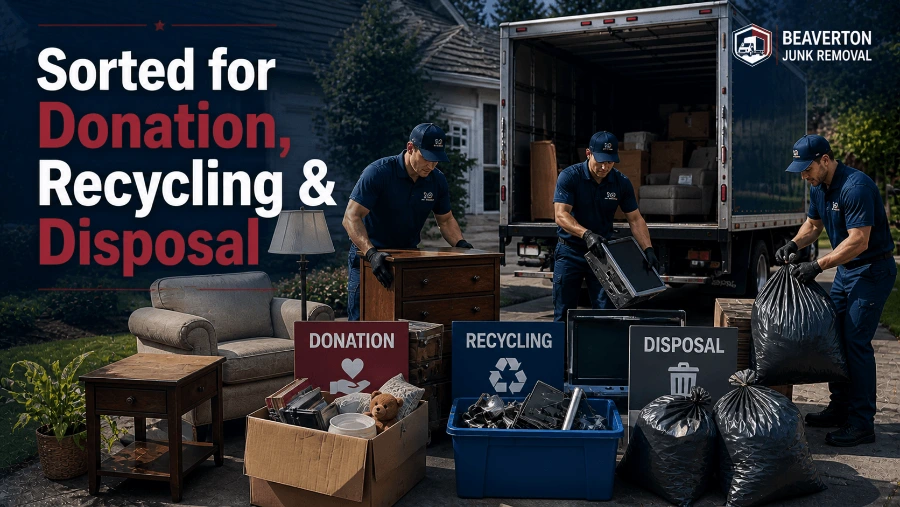
When we remove junk in Beaverton, Oregon, your items go to one of three places: local donation partners like Goodwill and Habitat ReStore, certified Oregon recycling facilities, or the Tualatin Valley Waste Recovery transfer station in Hillsboro. Beaverton Junk Removal diverts up to 70% of every load from the landfill.
A customer in Bethany called me the week after we cleared her garage. She hadn’t asked during the job, but it had been bothering her since we drove away. “Where did all of it actually go?” she said. “The dresser my kids used. My husband’s old tools. All those bags.”
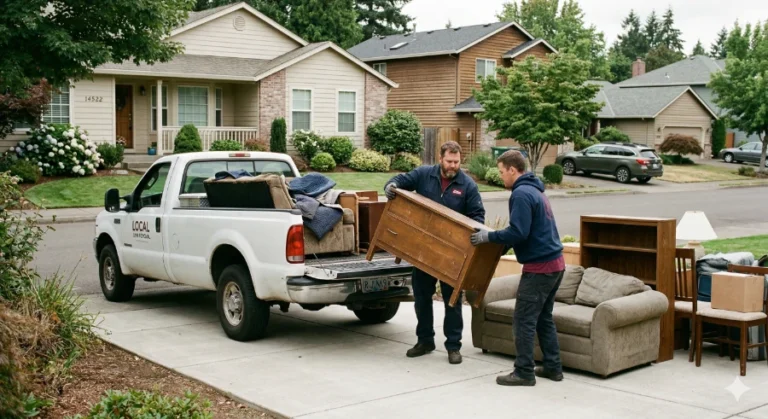
I told her exactly what happened. The dresser went to Habitat ReStore on TV Highway. The tools were sorted for metal recycling at a certified facility. The bags of general debris went to the Tualatin Valley Waste Recovery facility off Minter Bridge Road in Hillsboro. Nothing got dumped on the side of a road. Nothing went to a random site.
She was quiet for a second. Then she said, “I wish someone had just told me that when you were here.”
That’s why I’m writing this. If you’ve used our local junk removal team or you’re thinking about booking a pickup, you deserve to know exactly where your stuff goes after we drive away. So here’s the full picture—no vague promises, just the real process.
Where Does Junk Go After Removal in Beaverton? The 3 Real Destinations
Every load we pick up across ZIP codes 97005 through 97008 goes to one of three places. We sort every haul before any of it reaches a final destination.
Here’s how it breaks down for our Washington County loads:
| Destination | Share of Load | What Goes There |
|---|---|---|
| Donation | ~70% | Furniture, appliances, and household goods in usable condition |
| Recycling | ~15% | Metals, electronics, mattresses, and cardboard |
| Transfer Station | ~15% | Non-recyclable debris, damaged items, and regulated waste |
That 70% diversion number isn’t a marketing claim. It’s the result of sorting every single load before we drive to a disposal facility. When we drop a donated dresser at Habitat ReStore instead of a transfer station, that item skips Washington County disposal fees entirely—and that saving is part of why our pricing stays fair.
Destination 1 — Donation Partners (70% of Loads)
Usable items go to three main partners we’ve worked with since we started serving the area in 2023.
Goodwill accepts furniture in clean condition, small appliances, housewares, and clothing. Their Washington Square-area location serves Washington County residents directly. Items need to be functional and free of major damage.
Habitat ReStore on TV Highway accepts building materials, large furniture, appliances, and hardware. If you’re clearing a renovation or a full home, this is where most of the furniture ends up. They resell everything to fund affordable housing projects in the Portland metro area.
St. Vincent de Paul is one of the few local charities that accepts large furniture for free pickup and walk-in donation. Sofas, dressers, bed frames, and dining sets—items that other organizations turn away. They serve families across Washington County directly.
We don’t guarantee donations for every item. Condition decides where an item goes. A sofa with pet damage goes to recycling or disposal. A clean sofa in solid shape goes to St. Vincent de Paul or Habitat ReStore. We make that call on-site.

Destination 2 — Certified Oregon Recycling (15% of Loads)
Items that can’t be donated but can be recovered go to certified recycling facilities. Oregon has specific laws that govern how several of these categories must be handled.
Here’s what gets recycled and how:
- Scrap metal — copper pipes, steel frames, and old appliances go to Oregon-certified metal recyclers. Nothing gets buried.
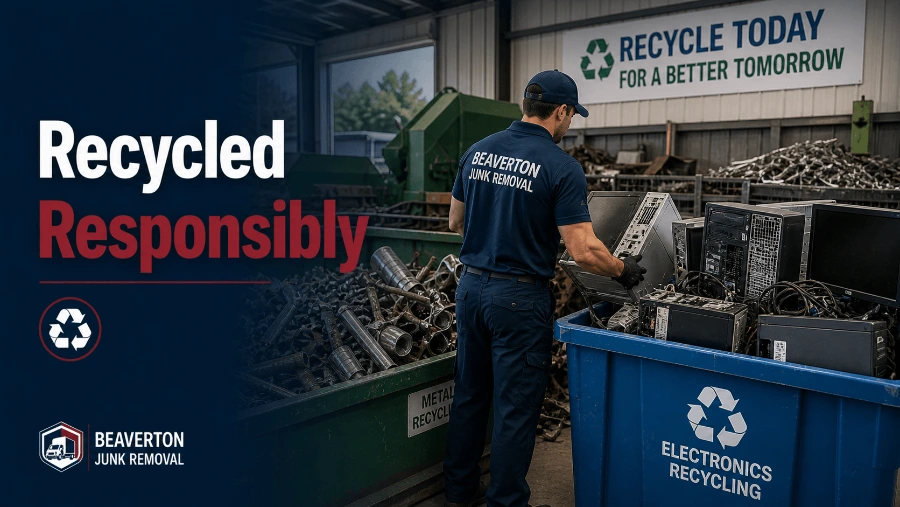
- Electronics — TVs, computers, and monitors follow Oregon E-Cycles, a state law making e-waste recycling free and mandatory.
- Mattresses — routed through Oregon’s HB 2358 program. Steel springs, foam, and fabric are recovered separately.
- Appliances with refrigerants—fridges, freezers, and AC units—are handled by EPA Section 608-certified technicians before any metal recycling begins.
- Cardboard and clean paper — separated and sent to standard recycling streams.
Destination 3 — Transfer Station (15% of Loads)
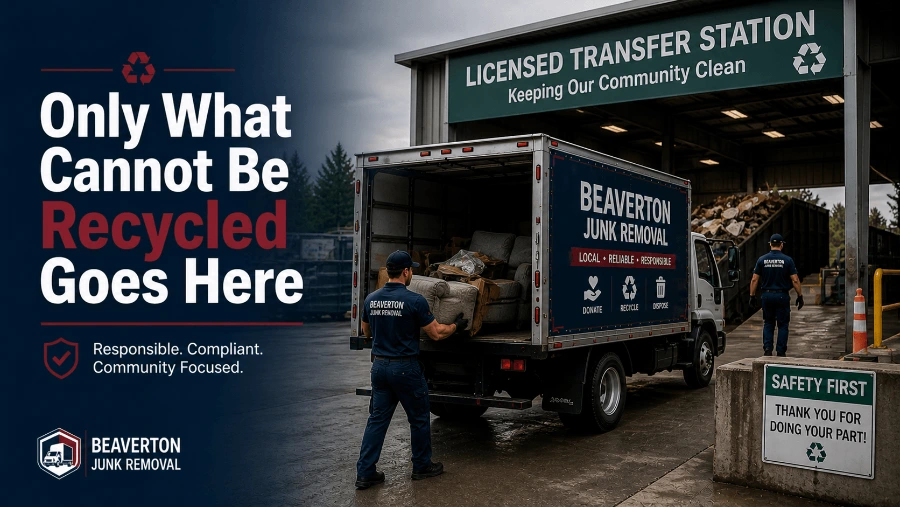
What can’t be donated or recycled goes to the Tualatin Valley Waste Recovery Facility at 3205 SE Minter Bridge Rd in Hillsboro. This is the primary licensed transfer station serving Washington County.
The facility accepts general household debris, construction waste, and non-recyclable materials. Loads are weighed on arrival. Washington County charges by the ton. The facility operates under Oregon DEQ standards and does not accept hazardous materials at its general waste gate. Items that are broken, contaminated, heavily damaged, or unsortable go here as a last resort — not as a default.
Does Junk Removal Actually Sort Items or Send Everything to Landfill?
Not all junk removal companies sort items properly. Some crews load everything together and take it directly to a transfer station. In our process, every item is evaluated on-site as part of how we handle items responsibly. Usable furniture goes to donation partners, recyclable materials are separated, and only non-recoverable waste goes to the landfill, which is typically around 15% of the load.
What Happens Right After Our Crew Leaves Your Property?
Most customers picture the truck driving straight to a dumpsite. That’s not what happens. There’s a sorting process between your curb and any final destination.
Here’s exactly how the process works, step by step:
Does Donated Junk Lower Your Removal Cost?
Yes—and this is the part most companies never explain.
Washington County transfer stations charge by weight. The Tualatin Valley Waste Recovery Facility charges a minimum of $35–$47 per load, then a per-ton rate above 240 pounds. Every pound we donate instead of dump is a pound we don’t pay disposal fees on.
When we sort a load and find that 60% of it can go to Habitat ReStore and Goodwill, we reduce our transfer station costs significantly. We build that saving into your quote. It’s one reason why a load with lots of clean, reusable furniture often costs less than a load of broken debris of the same size.
You can see exactly how donated items factor into your final bill in our full breakdown of what affects junk removal pricing — that guide covers every cost driver before you book.
Can I Tell the Crew Where I Want My Items to Go?
Yes, you can absolutely guide the process. If you prefer certain items to be donated instead of disposed of, let the crew know before or during pickup. We document your request and prioritize donation partners first. While final acceptance depends on item condition, we always explain where each item ends up before leaving your property.
Where Does Your Furniture Go? What Gets Donated vs. What Doesn’t
Furniture is the most common item we remove in Cedar Hills, Five Oaks, and Raleigh Hills homes. Here’s exactly how we route it using our full-service hauling and removal options.
What Goodwill Accepts — and What They Reject
Goodwill accepts sofas, chairs, dressers, desks, and small furniture in functional condition. They reject items with visible mold, pest damage, broken frames, or strong odor. They also reject particleboard furniture that is swollen or damaged by water. If an item fails its intake check, it comes back to us for recycling or disposal.
What Habitat ReStore Takes From Local Homes
Habitat ReStore on TV Highway is one of the best options for items from home renovations and full cleanouts in Bethany and Cedar Hills. They accept large furniture, working appliances, cabinets, doors, windows, hardware, and building materials. Items need to be complete, functional, and clean. This is where most of the solid wood furniture and working kitchen appliances from our nearby pickups end up.
St. Vincent de Paul — Large Items and Full Sets
St. Vincent de Paul accepts large furniture that Goodwill typically won’t take. Full bedroom sets, sectional sofas, dining room tables with chairs, and large dressers. They serve Washington County families directly. We prioritize this partner for large furniture loads from estate cleanouts and senior downsizing jobs across 97005 and 97007.
Where Does Recycling Go in Washington County?
Oregon has some of the strictest recycling laws in the country. That matters directly for how we handle specific item categories on every pickup across the local area. Washington County residents can also verify accepted materials and drop-off locations using the Washington County Solid Waste and Recycling program.
Scrap Metal
Copper, aluminum, steel, and other metals go to certified metal recycling facilities in the Portland metro area. Scrap metal has measurable commodity value, which means recyclers actively want it. None of our metal loads go to a general landfill.
Electronics — Oregon E-Cycles Law
Oregon E-Cycles is a state-funded recycling program that makes electronics disposal free at registered locations. Under Oregon law, manufacturers and retailers fund the program—not consumers. TVs, desktop computers, laptops, monitors, and tablets from our pickups go to E-Cycles registered processors. This covers Bethany and Cedar Hills the same as central ZIP codes. No extra fee for electronics when you book us.
Mattresses — Oregon HB 2358
Oregon passed mattress recycling legislation that funds a statewide program through a small fee collected at the point of sale. We route all mattresses through this program. Steel springs go to metal recycling. Foam is processed separately. Fabric covering is recovered where possible. Mattresses never go to a standard landfill when collected through our service.
Appliances — Refrigerant Handling Under EPA Section 608
Refrigerators, freezers, window AC units, and dehumidifiers contain refrigerants that are federally regulated under EPA Section 608. These gases cannot be released into the atmosphere. Certified technicians must recover them before any appliance goes to a metal recycler. We route refrigerant-containing appliances to facilities with Section 608-certified staff. This is not optional under federal law—and it’s one reason appliance disposal sometimes costs slightly more than other items.
Does Junk Removal Actually Recycle in Beaverton?
Yes — but only if the company sorts before disposal. Our crew separates metals, electronics, and mattresses at your property through our recycling and removal services before the truck moves. Oregon E-Cycles handles TVs and computers at no extra charge. Mattresses follow the HB 2358 state program. Scrap metal goes to certified Portland-metro facilities. Roughly 15% of every load we collect is recycled through these regulated channels.
Can I Watch or Track Where My Items Go?
We don’t offer real-time GPS tracking on loads. But we do something more useful — we tell you before we drive away.
After we load your items, we give you a verbal rundown of where the major pieces are heading. Dresser to Habitat ReStore. Metal for recycling. Debris to Hillsboro. It takes 90 seconds, and it answers the question before you have to ask it.
If you want receipts from donation drops, ask us when you book. For large estate cleanouts in 97008 and 97006, we can request donation receipts from Habitat ReStore and Goodwill that may be usable for tax documentation. We can’t guarantee acceptance—the charity decides—but we can request it.
The Sorting Decision Our Crew Uses — Item by Item
Here’s the exact logic we apply to every item we pull off a property in Washington County.
| Item Condition | Where It Goes |
|---|---|
| Clean, functional furniture | Goodwill / Habitat ReStore / St. Vincent de Paul |
| Large furniture, full sets | St. Vincent de Paul |
| Building materials, appliances | Habitat ReStore |
| Broken but metal-bearing items | Scrap metal recycling |
| Electronics (any condition) | Oregon E-Cycles facility |
| Mattresses (any condition) | Oregon HB 2358 program |
| Appliances with refrigerant | EPA 608-certified appliance recycler |
| Water-damaged or contaminated | Tualatin Valley Waste Recovery |
| General non-recyclable debris | Tualatin Valley Waste Recovery |
| Hazardous materials | We do not take these—see below. |
We make these calls on-site. No sorting happens after the truck leaves the local area.
What Happens to Items That Can’t Be Donated or Recycled?
Items that fail condition checks or fall outside Oregon’s recycling programs go to the Tualatin Valley Waste Recovery Facility in Hillsboro — the licensed transfer station serving Washington County. The facility weighs every load on arrival and charges by the ton under Oregon DEQ standards. Nothing gets dumped illegally. Fines for illegal dumping in Washington County can exceed $3,000 per incident.
Is Your Junk Removal Company Actually Eco-Friendly?
It depends entirely on the company.
A crew that loads everything into one section and drives straight to a transfer station has a diversion rate close to zero. No sorting. No donation. No recycling. Just weight fees at Hillsboro and a full landfill load.
We run at roughly 70% diversion. That means 70 cents of every dollar of material we collect gets donated or recycled instead of buried. For a family in Progress Ridge clearing out a full home, that’s the difference between most of their belongings finding a second use versus most of them going into the ground.
The honest question to ask any junk removal company before you book: “What is your diversion rate, and where do your loads actually go?” If they can’t answer in under 30 seconds with specific names, they probably don’t sort.
What We Cannot Take — Oregon DEQ Restricted Items
Oregon DEQ regulations restrict certain materials from general hauling. For a complete list of regulated waste categories, visit the Oregon DEQ waste management page. These items require licensed abatement contractors or specialized disposal routes.
Hazardous Materials
Motor oil, paint cans, pesticides, solvents, and other household hazardous waste cannot go in a standard junk removal truck. Washington County residents can drop these at the Tualatin Valley Waste Recovery Facility’s hazardous waste gate or at Metro’s household hazardous waste events. We can advise on the correct facility when you call.
Asbestos and Lead Materials
Homes built before 1980 in Cedar Hills, Raleigh Hills, and older nearby neighborhoods may contain asbestos in floor tiles, ceiling tiles, pipe insulation, or drywall. Lead paint is common in pre-1978 construction. These materials require licensed abatement before any hauling company can legally remove them. We do not haul suspected asbestos or lead materials. Illegal dumping fines in Washington County can exceed $3,000 per incident.
Medical Waste
Sharps, syringes, and clinical waste require specialized medical waste disposal. These cannot go in a standard junk removal truck under any circumstances. Contact Washington County’s solid waste program at washingtoncountyor.gov/swr for approved medical waste disposal options.
Why It Matters Which Company You Choose
When a junk removal crew skips sorting and drives straight to the transfer station, several things happen. You pay more because 100% of your load hits disposal fees. Reusable items that could serve Washington County families go into the ground. And companies that dump illegally — a real problem in our area — put the previous property owner at risk of investigation.
Franchise junk removal companies often have lower diversion rates than local operators. Franchise overhead, route volume pressure, and centralized disposal contracts can push diversion rates below 50%. A local crew with direct relationships to Habitat ReStore, Goodwill, and St. Vincent de Paul has both the flexibility and the incentive to sort every load.
We’re a family-owned team. We’ve been serving the area since 2023. We know the donation coordinators at our partner charities by name. That relationship is the reason our diversion rate holds at 70% instead of dropping when the schedule gets busy.
Frequently Asked Questions About Junk Disposal
Yes. If you have items you specifically want to go to a charity rather than a transfer station, tell us when you book. We’ll note it in the job and do our best to route those pieces to Habitat ReStore or St. Vincent de Paul. We can’t guarantee acceptance—the charity inspects every item—but we will make the attempt and tell you the outcome.
If Goodwill or Habitat ReStore turns down a piece we brought in, it comes back to us for routing to either metal recycling or the transfer station in Hillsboro, depending on what it is. You don’t pay extra when this happens. The original quote covers disposal regardless of where the item ends up.
Yes, relative to the alternative. A homeowner hauling a full truck to the transfer station themselves, without sorting, sends 100% to the landfill. We sort, donate, and recycle first. The 15% that reaches the transfer station is what genuinely cannot be recovered. That’s very different from skipping the process entirely.
Ask us when you book. For large cleanouts in 97006, 97007, and 97008, we can request receipts from Habitat ReStore and Goodwill. They issue their own receipts — we don’t issue them on their behalf. Keep in mind the charity makes the final call on whether an item qualifies for a receipt.
Book Your Pickup Today — Space Cleared, Junk Gone Right
Now you know exactly where your junk goes after removal in Beaverton—specific facilities, named charity partners, and the Oregon laws that govern every step. No guessing. No vague promises. Just a real process that keeps 70% of every load out of the landfill.
Don’t let clutter sit another week. Every day a rental unit stays full is a day of lost income. Every bag of debris sitting in your garage costs you nothing to book and everything to ignore.
We serve ZIP codes 97005 through 97008. Pickups run Monday through Saturday, 6 AM to 8 PM, with evening and weekend appointments available. Most jobs finish in 2 to 4 hours. We’re licensed, insured, family-owned, and rated 4.9 stars by 500-plus customers since 2023.
Call (971) 297-3939 right now. We respond within 30 minutes and provide a firm on-site quote before any work begins. Slots fill fast—especially on weekends.
Where Will My Junk Go?
Select an item — see its destination instantly
Check Pricing by ZIP Code