7 Mistakes Beaverton Residents Make at Metro South Transfer Station
Metro South Transfer Station in Oregon City is where most Beaverton residents take unwanted junk when they self-haul. First-time visitors routinely face surprise fees, rejected loads, and longer lines than expected. This guide covers seven common mistakes and what to do instead.
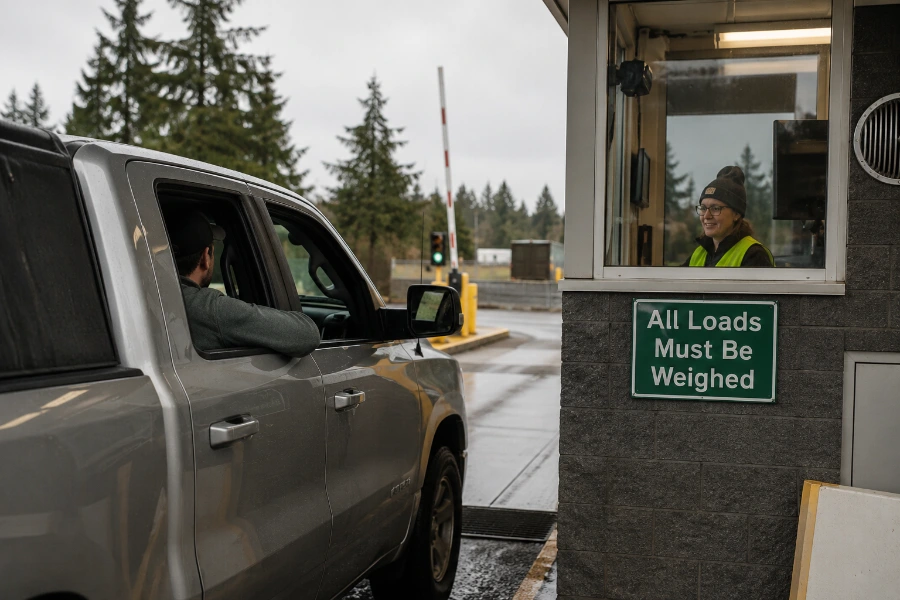
I drove down to Metro South one Tuesday morning, my truck loaded with a Cedar Hills garage cleanout, yard trimmings, an old TV, and a few mystery boxes. I figured an hour, tops. Two and a half hours later, I left with a surprise charge on my receipt and a long list of things I wish someone had told me first. We haul junk across Washington County every week, so our crew has now watched hundreds of locals navigate the disposal center for the first time. Most make the same mistakes. Here is what they are.
What Is the Metro South Transfer Station?
The disposal center is a public waste drop-off facility at 2001 Washington Street, Oregon City, OR 97045, owned by Metro, the regional government for Greater Portland, and operated by Recology Portland. Residents and businesses can bring household garbage, yard debris, recyclables, and bulky items to be disposed of by weight.
The waste drop-off center is open 7 AM to 7 PM daily. A co-located hazardous waste facility sits on the same property but runs separate hours: 9 AM to 4 PM daily. Both are closed on Thanksgiving, Christmas, and New Year’s Day.
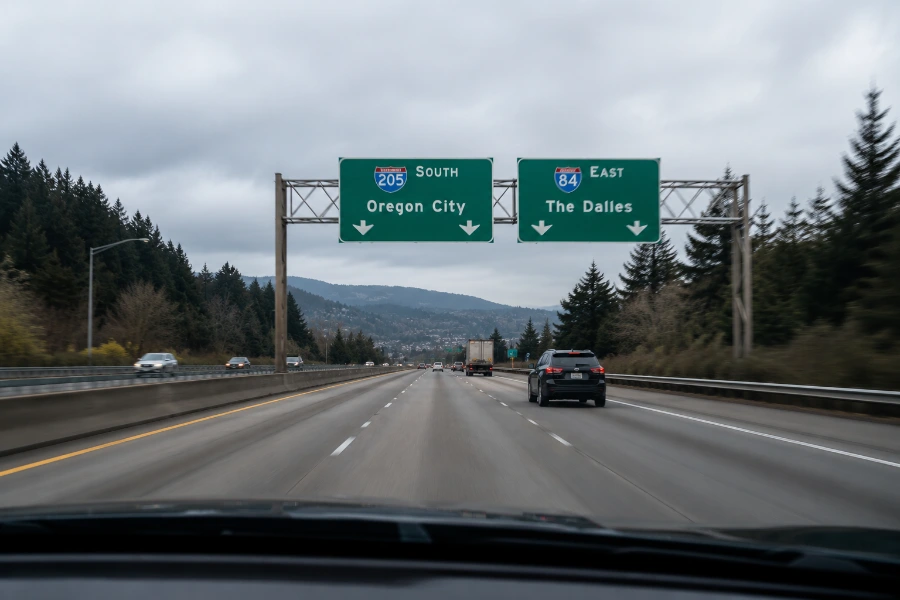
From most Beaverton neighborhoods, the drive to Oregon City takes 25–35 minutes via I-205 South. With unloading and any queue, expect two to three hours for a first trip if you go unprepared.
7 Mistakes First-Time Visitors Make at Metro South
Most first-time visitors make the same avoidable errors. These mistakes usually lead to extra fees, rejected loads, or much longer trips than expected.
The $25 Mistake Almost Every First-Time Visitor Makes
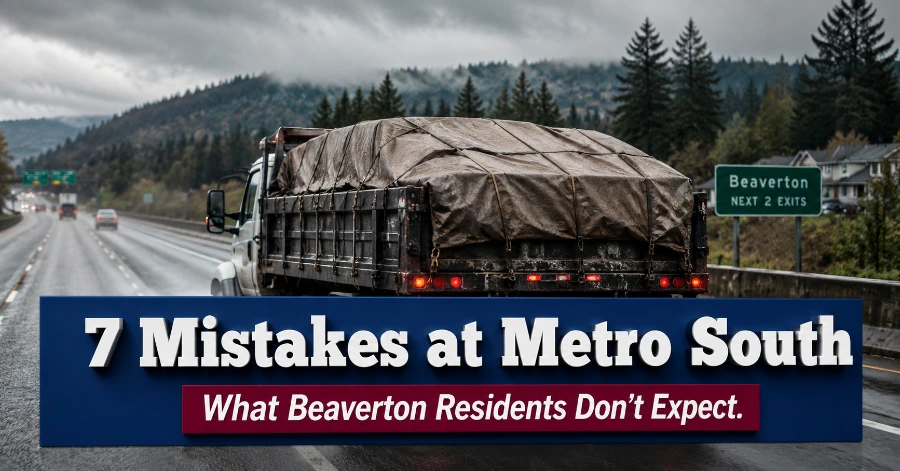
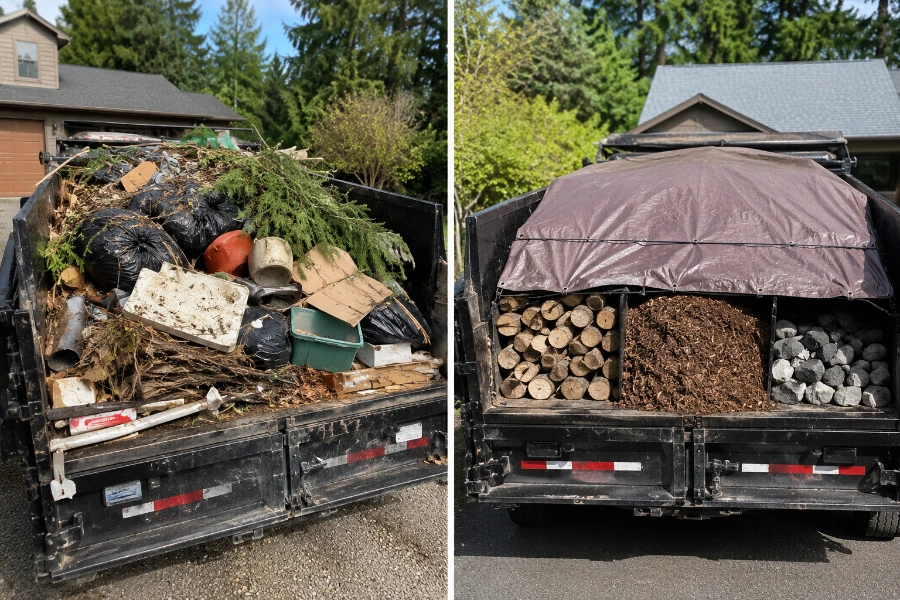
Most people don’t know this rule exists until they arrive. The disposal center charges an uncovered load surcharge on any vehicle without a cover securing the cargo. The scale attendant flags it at weigh-in, and it appears on the receipt. There is no warning or grace period.
Beyond the fee, Oregon law allows littering fines for loads that shed debris on the road. A loose bag or cushion that flies off on I-205 South is an expensive problem.
Fix: Use a tarp, cargo net, or bungee-secured cover before you leave the driveway. That’s all it takes.
The Sorting Error That Can Cost You $80 Per Ton Extra
Most people throw everything into the truck together and assume the station will sort it later. The waste drop-off center doesn’t work that way, and mixed loads almost always cost more than expected.
Clean yard debris (free of dirt, sod, rocks, and plastic bags) has a significantly lower disposal rate than mixed garbage. The gap between those two rates runs roughly $80 per ton. If your grass clippings are buried under household junk, the whole load gets classified and charged at the garbage tier.
The same rule applies to wood: raw dimensional lumber and unpainted pallets have a lower rate than engineered wood, painted wood, or laminated materials. Mix them together, and you lose the discount.
Fix: Keep yard debris in a clearly separated section of the truck bed — or make two trips. Load attendants direct you based on what you declare at the scale house. Declare accurately.
If sorting feels like more work than it’s worth, our yard debris pickup service handles all of that automatically, no Oregon City trip required.
Why Some Loads Get Rejected at the Gate Before Unloading
A lot of first-time visitors make it all the way to the scale before discovering something in their load isn’t allowed. Hazardous materials, banned items, and improperly packed waste are some of the biggest reasons loads get turned away.
Motor oil, paint, batteries, propane tanks, fluorescent bulbs, yard chemicals. These are household hazardous wastes. They cannot go into the waste drop-off center general unloading area under any circumstances—Oregon DEQ regulations prohibit it.
The hazardous waste facility sits on the same Metro South property but operates on completely different hours. The transfer station closes at 7 PM. The HHW facility closes at 4 PM daily. If you arrive at 5 PM with paint cans mixed into your load, they cannot be accepted anywhere on site that evening.
Metro’s own hazardous waste staff say it plainly: “Please don’t throw everything into a black trash bag.” We can’t see what’s in there.” Unmarked containers slow down the whole facility.
Fix: Separate hazardous items before you load the truck. Bring them between 9 AM and 4 PM; disposal is free for households up to 35 gallons. Keep products in original labeled containers, packed upright in a sturdy box in the trunk.
As for responsible haulers, they sort and divert these materials before anything reaches a transfer station; that’s a process most people don’t see behind the scenes.
The Weekend Timing Mistake That Creates 45-Minute Lines
The time you arrive can completely change your experience at the transfer station. Some visitors get through quickly, while others spend nearly an hour sitting in traffic before reaching the unloading area.
Every garage cleanout, yard overhaul, and renovation project in Portland tends to land at the waste drop-off center on the same Saturday morning. It has publicly confirmed that self-haul volumes create significantly longer waits on weekends and has occasionally asked self-haul customers to delay trips entirely due to station backup.
Two windows that reliably avoid the worst of it: arriving right at 7 AM on a weekend, before the rush builds—or after 2 PM Saturday when the morning crowd has moved through. Weekday midmorning, Tuesday through Thursday, is the fastest of all.
A Tuesday trip to Oregon City costs the same as a Saturday trip. The difference is often an hour of your life.
The Items That Can Trigger a $3,000 Fine If You Don’t Check Them
Some materials create much bigger problems than an extra disposal fee. Bringing restricted or hazardous items without checking the rules first can lead to rejected loads, testing requirements, or costly penalties.
Homes built before 1980 — common in Cedar Hills, Raleigh Hills, and Five Oaks — may contain asbestos in floor tiles, insulation, pipe wrap, and drywall compound. Renovation debris from these properties isn’t ordinary junk. Every load of remodeling waste goes through a screening process at the scale. If asbestos is found, the customer is responsible for testing and professional removal costs.
Other items that are flatly rejected: vehicles with drive motors, motor homes, railroad ties over four feet, tractor and semi-truck tires, and sealed black garbage bags with unidentifiable contents.
Fix: If your load includes any renovation material from a pre-1980 property, check Metro’s accepted materials list at oregonmetro.gov before loading the truck. When in doubt, a professional crew handles materials assessment before anything is transported. Our full house cleanout service team does this as a standard part of every job.
The Free Drop-Off Step Most People Skip Entirely
A surprising number of visitors throw away items that could have been recycled or dropped off for free. Missing those separate drop-off areas often turns a cheap trip into a much more expensive one.
Oregon E-Cycles accepts desktop computers, laptops, tablets, monitors, TVs, printers, keyboards, and mice — up to seven items per person per day — at no charge. Intact or broken. These go to the E-Cycles area before the main scale, so they never count toward your paid load weight.
Recyclables (aluminum cans, flattened cardboard, glass bottles, tin cans, and plastic bottles with necks) also get special treatment: sort them to the top or one end of your load, declare them at the scale, and you get a rebate—$3 for under 100 pounds sorted and $6 for 100 pounds or more.
Mattresses: up to four per customer per day accepted free, with a $2.30 credit per unit in a mixed load. Standard mattresses and box springs only; futons, waterbeds, and air mattresses are charged as garbage.
Fix: Pull electronics, recyclables, and eligible mattresses out before you drive through the scale. They go to separate areas first.
Why Some Beaverton Residents Drive 10 Extra Miles for Nothing
Many people automatically head to it without checking whether it’s actually the closest option. Depending on your neighborhood, another transfer station may save you extra driving time, fuel, and waiting.
It operates two public transfer stations: Metro South at 2001 Washington Street in Oregon City and Metro Central at 6161 NW 61st Avenue in Portland. It is the name more people recognize—but that doesn’t make it the closer option.
| Neighborhood | ZIP | Closer Station | Approx. Drive |
|---|---|---|---|
| Raleigh Hills / West Slope | 97225 | Metro Central | ~10 mi via US-26 E |
| Downtown Beaverton | 97005 | Central | ~11 mi via US-26 W |
| Cedar Hills / Five Oaks | 97006 | Central | ~13 mi via US-26 W |
| Bethany / Rock Creek | 97229 | Central | ~12 mi via US-26 W |
| Aloha South / Progress Ridge | 97007 | South | ~16 mi via I-217 S to I-205 S |
| Murrayhill / Sexton Mountain | 97007 | South | ~15 mi via I-217 S to I-205 S |
The one case where it wins despite the distance: it stays open until 7 PM, while Central closes at 5 PM. For a late-afternoon or early-morning run, South’s extended hours make it the practical choice regardless of which side of Beaverton you’re starting from.

How Much Does It Cost To Dump At Metro South?
2025 Minimum Fees (covered loads under 240 lbs) — effective July 1, 2025
Loads over 240 lbs are charged by proportion of the per-ton rate, plus a transaction fee of $7.85 (automated scale) or $28.00 (staffed scale). Uncovered loads add $25/ton—or $3 on minimum-fee loads. Current rates are always at oregonmetro.gov.
📋 Before You Load the Truck — 6-Point Quick Check
A self-haul trip to Oregon City makes sense for a manageable single-load project. Where the math shifts is with larger volumes—a full garage, an estate, or several truckloads—where multiple round trips plus per-ton fees start to approach the cost of a local crew who handles sorting and disposal without the drive. See how full-service removal is priced for different load sizes.
Is Metro South or Metro Central closer from Beaverton?
For most Beaverton ZIP codes—97005, 97006, 97225, and 97229—Central in northwest Portland is the closest facility. The exception is southern Beaverton: 97007 residents in Aloha South, Progress Ridge, and Murrayhill are closer to South via I-217 South to I-205 South.
Metro Central’s hard limit is its hours: it closes at 5 PM, compared to Metro South’s 7 PM. For anyone who needs a late-afternoon run or wants the 7 AM early opening, it is the practical choice regardless of ZIP code.
Questions About Your First Visit
Yes—up to four standard mattresses or box springs per customer per day at no charge through the mattress recycling program. You also receive a $2.30 credit per unit when mattresses are part of a larger mixed load. Futons, waterbeds, crib mattresses, and air mattresses are charged as garbage and do not qualify.
Yes — but not at the main transfer station. Paint, motor oil, and other hazardous materials go to the co-located HHW facility on the same property. That facility is open 9 AM to 4 PM daily. Disposal is free for households up to 35 gallons by container size.
Yes. Woodco at 3011 SW 170th Ave, Beaverton, accepts clean yard debris and clean concrete at their permitted facility—no Oregon City drive required. Hours are Monday through Friday, 7:30 AM to 5 PM, and Saturday, 8 AM to 4 PM. This works for yard debris only — not household garbage, furniture, or mixed waste. For larger volumes or storm cleanup, our yard debris pickup service handles collection directly from your property.
When a Self-Haul Trip Stops Making Sense
Knowing what to expect at Metro South Transfer Station makes the trip much easier for first-time visitors. Covering your load, sorting materials properly, and checking disposal rules ahead of time can help you avoid extra fees, rejected items, and long delays.
If your project is bigger than one truckload, a full garage, an estate cleanout, or years of accumulated junk, our local crew handles pickup, sorting, and disposal without multiple trips across Beaverton to Oregon City.
Metro South Trip Cost Estimator
DIY cost vs. professional pickup
Which Station Is Closer?