How to Clean Out a Garage Step by Step — Beaverton Guide
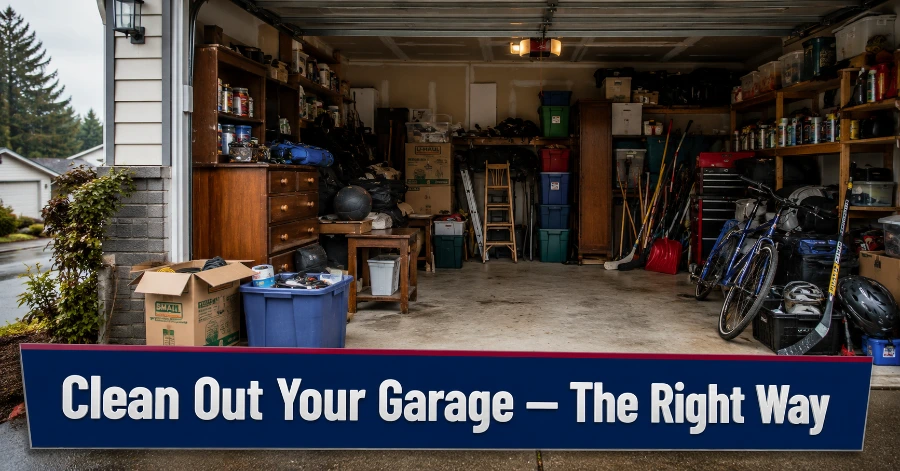
Cleaning out a garage in Beaverton starts with one rule: empty it completely before you sort anything. Work zone by zone; separate items into keep, donate, recycle, and trash piles; and handle hazardous materials like paint and motor oil through Washington County’s free disposal programs. Most one-car garages take one full day. Two-car garages typically take a weekend.
What Is the Fastest Way to Clean Out a Garage?
- Empty the entire garage before sorting anything.
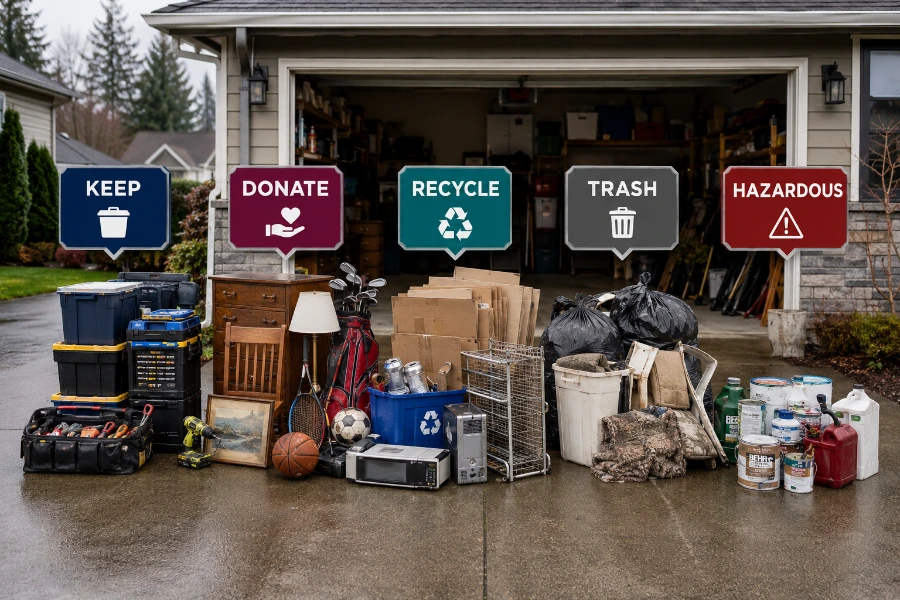
- Sort items into five zones: Keep / Donate / Recycle / Trash / Hazardous
- Handle Oregon-restricted items (paint, motor oil, gas) through Washington County’s free disposal programs.
- Deep clean the empty space before returning anything.
- Plan storage zones — then return only Keep items
- Most garages take one to two days using this method.
I pulled everything out of my garage on a Saturday in March. By noon, my driveway looked like a yard sale that went wrong — three decades of holiday decorations, a broken treadmill, and enough paint cans to coat a small school.
By Sunday evening, I had a clean two-car garage near Cedar Hills for the first time since we moved in. I parked both cars inside.
That cleanout taught me things the internet guides skip. Oregon’s rain penetrates into boxes stored on concrete. Half of what I thought was junk turned out to be donatable—tools, old sports equipment, and a workbench in fine condition.
Here is the exact process I used, refined from three years of helping Washington County homeowners do the same thing.
Why Beaverton Garages Get Overwhelmed So Fast
The city sits in the Willamette Valley. We get around 37 inches of rain per year. That dampness works against you in a garage. Cardboard boxes absorb moisture and collapse. Wood furniture left on concrete develops mold underneath. Items you intended to deal with “next weekend” stay for five years.
The Portland metro housing market plays a role too. Many local homes — especially in Cedar Hills, Five Oaks, and older Raleigh Hills neighborhoods — were built in the 1970s and 1980s with smaller garages. A single-car garage designed for one vehicle now stores two generations of accumulated belongings.
Add in Oregon’s no-sales-tax retail culture, the proximity to Costco on SW Jenkins Road, and frequent tech-worker equipment upgrades without clearing out the old. The result is a perfect environment for garage overloads.
None of this is a character flaw. It is a structural problem. Structural problems have structural solutions.
Where Should You Start When Your Garage Feels Overwhelming?
Start by moving your car and anything with wheels completely out of the garage. That single action opens the floor and signals to your brain that the project has officially started.
The paralysis most homeowners feel comes from trying to sort while surrounded by clutter. When everything is inside, every item feels connected to the space. First, remove everything from the garage. Items that looked necessary inside look obviously unnecessary on your driveway. The empty-first method removes the decision overload from the garage environment entirely.
What You Need Before You Start
Do not move a single item until these are ready. Stopping mid-cleanout to find garbage bags is how projects stall.
Supplies checklist:
- Heavy-duty contractor bags (not kitchen bags — they split under weight)
- Clearly labeled boxes or bins: KEEP / DONATE / RECYCLE / TRASH / HAZARDOUS
- Work gloves—Beaverton garages frequently hide broken glass and rusty metal edges
- A dust mask—older garages collect mold spores and fine debris
- A folding table or two for sorting items off the ground
- A dolly or hand truck for appliances and heavy furniture
- A broom, shop vacuum, and mop for the cleaning phase
- Your phone or notepad—photograph donated items before they leave (useful for tax receipts)
- A cooler with water—cleanouts run long in Oregon’s unpredictable spring weather
If you plan to donate furniture or large items, call Habitat ReStore on TV Highway or Goodwill on Farmington Road the day before. Both locations have specific acceptance hours. Some items require scheduling a drop-off in advance.
One more thing: Tell your household what is happening. Garages hold shared belongings. A 10-minute walkthrough with family members before you start prevents arguments and prevents good items from going out accidentally.
Step 1 — How to Clean Out a Garage Step by Step: Empty Everything First
This is non-negotiable. Every professional organizer and every junk removal crew that has cleared hundreds of Washington County garages agrees: empty the whole space before you sort a single item.
When items are inside, your brain categorizes them as part of the garage. When those same items are on your driveway in daylight, your brain sees them differently. Things that seemed necessary inside look obviously unnecessary outside. The physical act of moving everything out forces a real decision about every item.
Empty the garage in this order:
- Start with the smallest and lightest items first — bags, loose items on shelves, small boxes
- Move to medium items—bins, storage containers, smaller furniture pieces
- Save heavy items last — appliances, large furniture, equipment
Use a dolly for anything over 50 pounds.
Place items in rough categories on your driveway as you bring them out—do not pile everything randomly.
If your driveway is small, use the front lawn or sidewalk temporarily. In most neighborhoods, this is acceptable for a single day. If your HOA has rules about exterior debris—Bethany, Cedar Hills, and Progress Ridge communities often do—plan to complete the full sort-and-return cycle the same day you empty the garage.
Real example — Garage Cleanout, 97006: A homeowner near SW Murray Boulevard had a two-car garage stuffed to the ceiling from two home consolidations. The garage had not held a vehicle in four years. We pulled everything onto the driveway in under two hours. Once the floor was visible, she identified what she wanted to keep — about 30% of what was there. The rest were sorted and cleared the same afternoon. The garage was sweep-ready by 5 PM.
Step 2 — Use the Keep / Donate / Recycle / Trash System
Once everything is on the driveway, set up four clearly separated zones. Physical separation matters — it prevents items from drifting back into the wrong pile.
Keep
An item belongs in Keep if it meets all three conditions:
- You used it in the last 12 months.
- You know exactly where it will live in the reorganized garage.
- It is in working condition.
If an item fails any one of these three tests, it does not automatically go to trash. Tools that work but have not been touched in two years are donation candidates. Seasonal decorations that come out every year belong in Keep. Sporting equipment your kids outgrew last season belongs in donations.
Donate
It has strong local donation infrastructure. Items that are clean, functional, and in reasonable condition find a second life in Washington County.
What is generally accepted:
- Tools in working condition — hand tools, power tools, garden equipment
- Furniture without major structural damage
- Working small appliances (no refrigerants required)
- Sports and outdoor equipment
- Shelving, storage bins, organizers
What is generally not accepted:
- Mattresses (Oregon Mattress Stewardship Program rules apply — certified recyclers only)
- Items with mold damage
- Broken power tools or appliances
- Car batteries and tires
Recycle
Oregon has strong recycling infrastructure. Many garage items that cannot go in curbside bins have specific recycling pathways:
- Scrap metal—Far West Recycling accepts scrap, old tools, and metal shelving
- Cardboard and paper — standard curbside recycling in ZIP codes 97005–97008
- Electronics—Oregon E-Cycles accepts computers, TVs, monitors, and printers at no charge (up to seven items)
- Appliances—metal components are recyclable; refrigerants require certified recovery first
Trash
Trash is what remains after “keep,” “donate,” and “recycle” are separated. A well-run garage cleanout produces less trash than most homeowners expect. If you are filling multiple contractor bags with items that could have been donated, slow down and re-evaluate.
Genuine trash includes: broken items with no recyclable components, severely damaged fabric or foam, and items contaminated with mold or rodent waste.
How Long Does It Take to Clean Out a Garage?
The honest answer depends on garage size and how long items have been accumulating.
Single-car garages with moderate clutter typically take one full day — six to eight hours if you work consistently. Two-car garages with years of accumulation commonly take a full weekend. Garages used as primary household storage for more than five years can take three to four days.
Oregon weather adds a variable. If rain is forecast, plan your empty-first phase for a dry window. Working under a canopy or tarp extends your options when a dry weekend is not available.
Step 3 — Hazardous Garage Items and Oregon Disposal Rules
This is the section most garage cleanout guides skip entirely. In Beaverton and throughout Washington County, certain common garage items cannot go in regular trash, cannot go in curbside recycling, and cannot be hauled away by junk removal crews. Disposing of them incorrectly is illegal under Oregon DEQ rules and can result in fines.
Items that require special disposal:
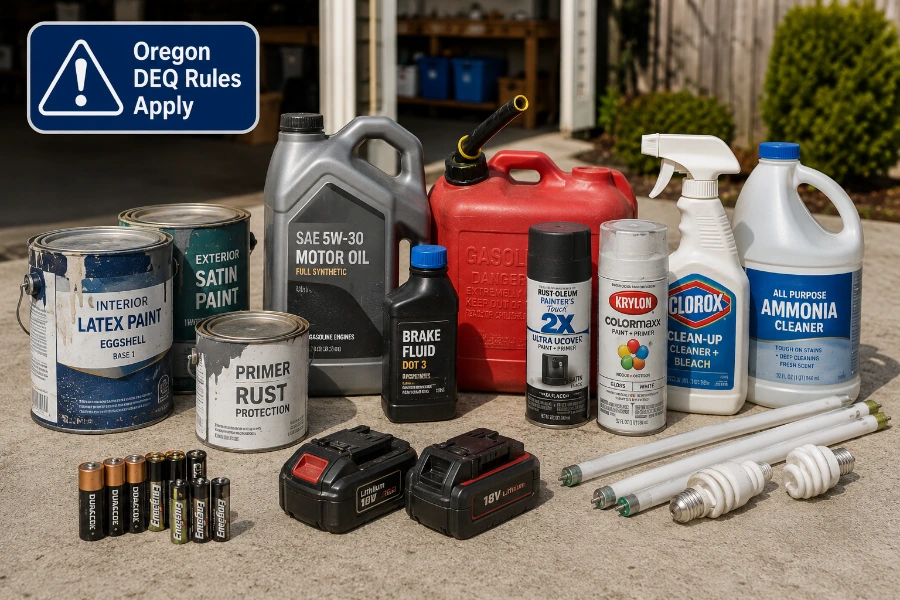
Paint (latex and oil-based)
Oregon law prohibits disposing of liquid paint in household trash. Latex paint that has fully dried and hardened is accepted as solid waste. Oil-based paint is classified as hazardous regardless of condition. Oregon’s Oregon’s PaintCare program drop-off locations throughout the Portland metro, including sites in the city and Aloha. Drop-off is free.
Motor oil
Used motor oil must go to an authorized collection facility. Auto parts retailers including O’Reilly Auto Parts on SW Canyon Road and AutoZone locations in it accept used motor oil at no charge.
Gasoline and fuel containers
Old gasoline cannot go in household trash or drains. Washington County Household Hazardous Waste program accepts gasoline, solvents, and other flammable materials. Events are held multiple times per year and are free for county residents.
Propane tanks
Small one-pound camping canisters are accepted at some hardware store return programs. Standard 20-pound tanks can be exchanged at Blue Rhino locations—Fred Meyer on TV Highway and Home Depot on SW Canyon Road both carry Blue Rhino exchange programs. Never puncture or crush propane containers.
Batteries
Single-use alkaline batteries are accepted in Oregon household trash under current state guidance. Rechargeable batteries, lithium-ion packs, and lead-acid car batteries must go to certified recyclers. Call2Recycle drop-off locations are available at major hardware stores.
Pesticides and herbicides
Washington County Household Hazardous Waste events accept both unopened and partially used containers. Do not pour pesticides down drains.
Fluorescent bulbs
Oregon requires proper recycling. Home Depot and IKEA locations accept CFLs and fluorescent tubes at no charge.
What Should You Never Throw in a Beaverton Trash Bin from Your Garage?
Six categories are prohibited from household trash under Oregon and Washington County rules: liquid paint, motor oil, gasoline and other fuels, propane tanks, rechargeable batteries, and pesticides.
Solid latex paint that has fully dried is the one exception—it can go in household trash once completely hardened. For everything else on this list, Washington County’s free Household Hazardous Waste program is the correct disposal route. Event dates are posted on the Washington County Solid Waste website.
Step 4 — Deep Cleaning After the Garage Is Empty
An empty garage reveals what years of storage hid. Dust, mold, rodent evidence, oil stains, spider webs, and moisture damage are common in the garages — particularly in homes built before 1990 in Cedar Hills and Raleigh Hills.
Cleaning order
- Sweep all surfaces top to bottom—ceiling corners and light fixtures first, then walls, then floor
- Inspect for mold along the base of walls and in areas where items sat directly on concrete
- Treat surface mold with a diluted bleach solution (one cup of bleach per gallon of water) and allow to dry completely
- Address oil or fluid stains on the floor with a degreaser before mopping.
- Check weather stripping on the garage door—Oregon’s rain finds every gap
- Check for signs of rodent activity and address them before reorganizing
- Allow the space to fully dry before anything goes back in, particularly in wet months.
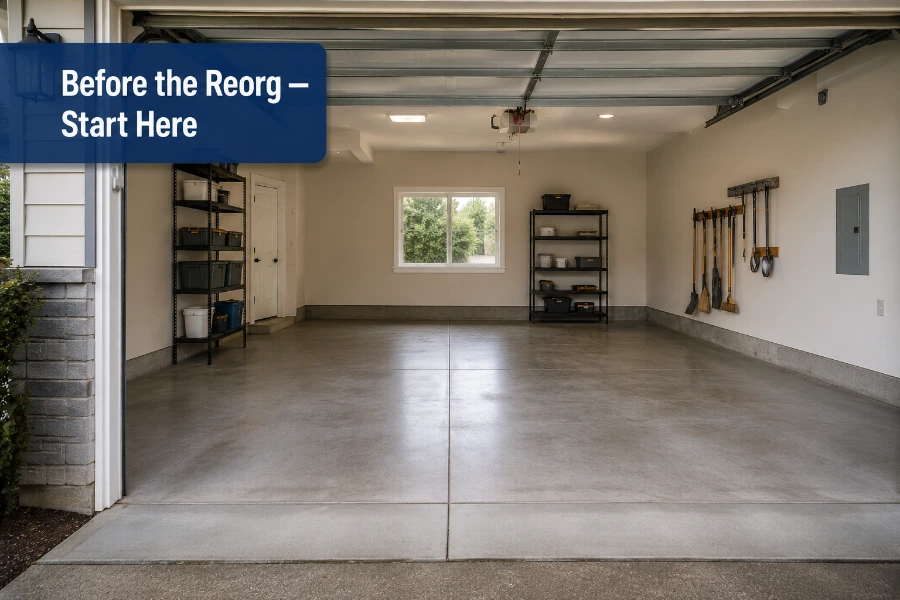
Oregon moisture notes
Concrete garage floors in the Willamette Valley absorb ground moisture, especially in spring. If you plan to store furniture, cardboard boxes, or fabric items, use shelving to keep everything at least six inches off the floor. Plastic bins outperform cardboard boxes in our climate. Moisture enters cardboard over a single wet season.
Step 5 — Planning Your Garage Zones Before Putting Anything Back
The number one reason garages fill up again within two years is that items go back without a plan. Zone planning takes 20 minutes and prevents the next cleanout from happening sooner than it should.
Standard garage zones:
| Zone | What Goes Here | Storage Type |
|---|---|---|
| Active use zone | Items used weekly — tools, sports gear, garden supplies | Wall-mounted, eye-level access |
| Seasonal zone | Holiday decorations, camping gear, seasonal clothing | Labeled bins, upper shelving, or ceiling racks |
| Vehicle zone | Car supplies, oil, an air pump, an emergency kit | Wall cabinet or shelf near entry |
| Project zone | Workshop tools, hardware, paint for current projects | Pegboard, tool chest |
| Donation staging | Ongoing donation bin for future items | Single labeled bin near the door |
What belongs in your house, not in your garage:
Beaverton’s damp climate makes garages a poor long-term home for books, paper documents, fabric items in unsealed containers, and unprotected wood furniture. Items frequently stored in garages that deteriorate quickly in Oregon conditions:
- Musical instruments
- Photographs and documents
- Wood furniture without protective coating
- Clothing stored in cardboard boxes
Move these inside or into climate-controlled storage if they matter to you.
Step 6 — Where to Donate Garage Items
It has three primary donation partners within practical distance of most ZIP codes. Calling ahead saves a wasted trip.
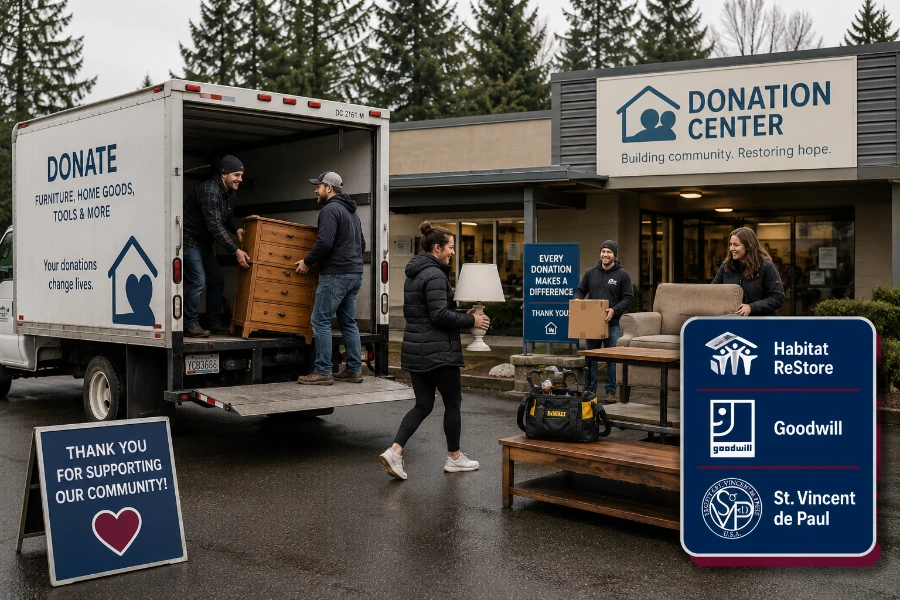
| Organization | Location | Best For | Notes |
|---|---|---|---|
| Habitat for Humanity ReStore | SW TV Highway, Beaverton/Aloha area | Building materials, large furniture, appliances, tools | Call ahead for large item acceptance. |
| Goodwill Industries | Farmington Rd and Canyon Rd locations | Clothing, small appliances, household goods, tools | Drive-through donations available |
| St. Vincent de Paul | SW Allen Blvd, Beaverton | Furniture, clothing, kitchenware, linens | Accepts large furniture — call for free pickup scheduling |
For items in very good condition
Neighbors app and Facebook Marketplace Beaverton groups move items quickly and for free. A “free garage cleanout items” listing posted on a Saturday morning typically generates same-day pickups for desirable tools and furniture.
For metal and scrap
Far West Recycling in Portland accepts scrap metal from local homeowners. Some scrap brings a small payment depending on material type and weight.
To understand exactly where items go after a junk removal pickup in Beaverton, the process covers donation partners, certified recyclers, and transfer station destinations in full detail. You can also read the full breakdown in our post on where donated garage items go after pickup.
Can I Donate Tools and Old Appliances?
Yes, and both are in high demand locally. Working hand tools and power tools in functional condition are accepted at Habitat ReStore and Goodwill.
Habitat for Humanity ReStore specifically prioritizes tools because they resell quickly to DIY buyers. Proceeds fund affordable housing projects in the Portland metro area. Old appliances are accepted if they work—non-working appliances are typically declined for donation but can be recycled for metal content through Far West Recycling or picked up by a licensed hauler for metal recycling credit.
Step 7 — When DIY Cleanout Is Not Enough
Most garage cleanouts are manageable with a vehicle, two days, and the system above. Some are not.
Signs the job has exceeded DIY scope
- The volume of items to remove exceeds what your vehicle can transport in two or three trips.
- Items include large appliances, hot tubs, or heavy furniture that require two people and equipment to move safely.
- Mold damage is extensive and affects structural elements.
- The garage has not been accessible for more than five years.
- You are managing an estate where the garage is part of a larger property clearing.
When the job reaches this point, the practical move is to complete your sorting first—keep items set aside, donation items boxed—then call for a single professional pickup of everything remaining.
A licensed large-item removal crew handles heavy appliances, furniture, and bulky debris in one visit. Our professional property cleanout services are built for situations where the sorting is done but the hauling is not manageable alone.
Most homeowners who do their own sorting and bring in professional haulers for the removal phase find this combination gives them the control they want with none of the physical strain.
Step 8 — HOA and Washington County Rules During Your Cleanout
If you live in a managed community in Bethany, Cedar Hills, Progress Ridge, or Five Oaks, review your HOA guidelines before emptying your garage onto the driveway.
Common HOA rules affecting garage cleanouts in Washington County:
- Exterior debris on driveways for more than 24–48 hours can trigger a courtesy notice.
- Roll-off containers placed on the street typically require a Washington County right-of-way permit.
- Some communities restrict the hours during which loading activity can occur.
- Visible clutter at the front of the property may conflict with community appearance standards.
Practical solution
Plan your empty-and-sort phase for a weekend when you can complete the full cycle in one continuous effort. If the cleanout spans multiple days, keep the driveway cleared each evening by returning keeper items inside and staging donation and trash items temporarily back in the garage.
Final Garage Cleanout Checklist — Print or Save
- Gather supplies: contractor bags, labeled bins, gloves, dust masks, dolly
- Call donation centers to confirm acceptance hours
- Notify household members — walk through together
- Check HOA rules if applicable
- Check weather forecast—plan empty-first phase for a dry window
- Move vehicles and anything with wheels out completely
- Empty garage fully before sorting — no in-place organization
- Sort into five piles: Keep, Donate, Recycle, Trash, and Hazardous.
- Apply the 12-month rule for keeping decisions
- Set hazardous items aside immediately—do not mix with other piles
- Photograph donated items before they leave for tax documentation
- Hazardous materials — Washington County HHW program or free PaintCare drop-off
- Paint — PaintCare location in Beaverton or Aloha area
- Motor oil — O’Reilly or AutoZone on SW Canyon Road
- Batteries — Call2Recycle location at local hardware store
- Furniture and tools — Habitat ReStore TV Highway or St. Vincent de Paul Allen Blvd
- Electronics — Oregon E-Cycles (free, up to seven items)
- Scrap metal — Far West Recycling
- Sweep top to bottom — ceiling, walls, floor
- Inspect for mold along floor edges and wall bases
- Treat mold with diluted bleach solution—allow full dry time
- Degrease floor stains
- Check garage door weather stripping
- Let the space dry completely before returning any items.
- Plan zones before returning any items.
- Keep stored items on shelving — minimum six inches off concrete
- Use plastic bins over cardboard for Oregon moisture protection
- Label all storage containers.
- Leave one empty bin near the door for ongoing donation staging
Beaverton Garage Cleanout Planner — “How Long Will My Cleanout Take?”
Does Oregon law require special disposal for paint and motor oil?
Yes. Oregon prohibits disposing of liquid paint and motor oil in household trash. Liquid oil-based paint is classified as hazardous regardless of quantity. Latex paint must be fully dried and solidified before it qualifies as solid waste. Motor oil goes to certified collection points—auto parts retailers on SW Canyon Road accept it free. Oregon’s PaintCare program operates drop-off locations in Washington county and Aloha at no charge to residents.
How do I handle mold or moisture damage during a garage cleanout?
Surface mold on concrete or drywall is common in garages and typically manageable. Treat it with a diluted bleach solution, allow full drying time, and improve ventilation before returning any items. Mold on stored items—fabric, wood furniture, cardboard—means those items should not return to the garage. If mold covers a large wall area or appears behind drywall, contact a licensed remediation contractor before proceeding. Oregon’s damp climate makes this a real concern in pre-1990 construction common in Cedar Hills and Raleigh Hills.
Frequently Asked Questions
Yes. Oregon prohibits disposing of liquid paint and motor oil in household trash. Liquid oil-based paint is classified as hazardous regardless of quantity. Latex paint must be fully dried and solidified before it qualifies as solid waste. Motor oil goes to certified collection points—auto parts retailers on SW Canyon Road accept it free. Oregon’s PaintCare program operates drop-off locations in Washington county and Aloha at no charge to residents.
Surface mold on concrete or drywall is common in garages and typically manageable. Treat it with a diluted bleach solution, allow full drying time, and improve ventilation before returning any items. Mold on stored items—fabric, wood furniture, cardboard—means those items should not return to the garage. If mold covers a large wall area or appears behind drywall, contact a licensed remediation contractor before proceeding. Oregon’s damp climate makes this a real concern in pre-1990 construction common in Cedar Hills and Raleigh Hills.
Seven categories require special handling under Oregon DEQ and Washington County rules: liquid paint (latex and oil-based); motor oil, gasoline, and solvents; propane tanks; rechargeable batteries; pesticides and herbicides; and fluorescent bulbs. Standard alkaline batteries are the one exception—those are now accepted in Oregon household trash. Washington County’s free Household Hazardous Waste program handles all other restricted categories. Oregon E-Cycles handles electronics at no charge up to seven items per visit.
Items donated to Habitat ReStore go directly to their store, where proceeds fund local affordable housing projects. Goodwill items support employment training programs in Oregon. St. Vincent de Paul furniture goes to families in need across Washington County. None of these organizations landfill donated items in usable condition. If you want a donation receipt for tax purposes, ask at drop-off—all three partners provide written receipts. For a full breakdown of what happens after a professional pickup, our post on where donated garage items go covers the complete sorting and destination process.
When Extra Help Makes Sense
If your garage cleanout becomes physically difficult or larger than expected, professional hauling can help remove bulky items safely after your sorting is finished.
Garage Cleanout Estimator
Quick check for your cleanout scope
Check Service by ZIP Code